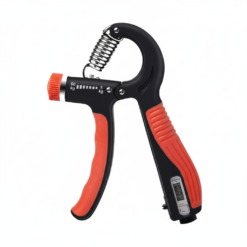
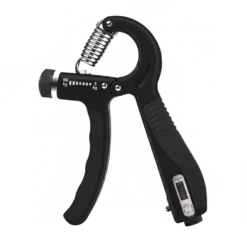
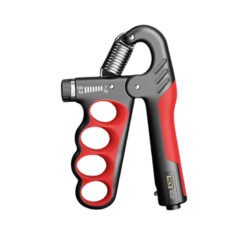
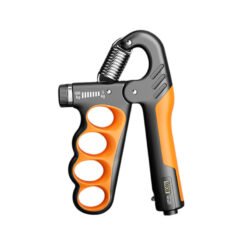
Have you ever considered that a simple handshake could predict your long-term health and physical longevity?
In clinical and athletic settings, grip strength is far more than a measure of forearm power. It serves as a vital biometric marker—often referred to as a “vital sign” for overall muscular health, biological aging, and functional independence.
Whether you are using a digital hand dynamometer to track your personal fitness progress, assess an athlete, or evaluate a patient, understanding how your numbers stack up against global standards is essential. This guide breaks down exact hand dynamometer grip strength norms by age and gender, explains the science behind the data, and shows you exactly how to optimize your score.
What is a Hand Dynamometer and Why Does Grip Strength Matter?
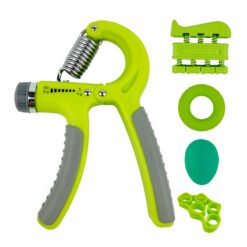
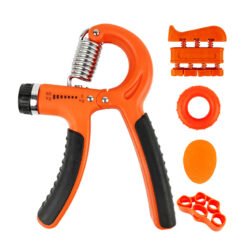
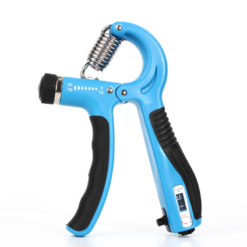
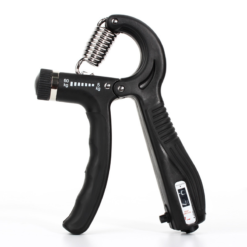
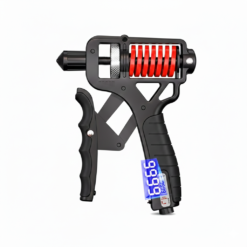
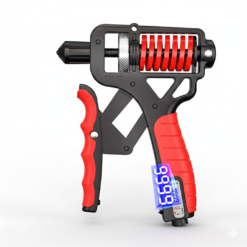
A hand dynamometer is a precision diagnostic tool engineered to measure the maximum isometric strength of the hand and forearm muscles. When you squeeze the device, it registers the peak force exerted—typically measured in kilograms (kg) or pounds (lbs).
While it seems like a localized fitness test, grip strength is a brilliant proxy for overall systemic health.
The Critical Importance of Squeezing Power
The Longevity Link: Landmark longitudinal studies (such as the PURE study) have demonstrated that reduced grip strength is a reliable predictor of all-cause mortality, cardiovascular health complications, and early biological aging.
Functional Mobility: As we age, a condition called sarcopenia (age-related muscle loss) naturally accelerates. Maintaining a strong grip correlates directly with the ability to perform daily tasks, such as carrying groceries, opening jars, and avoiding catastrophic falls.
Athletic Performance: For rock climbers, powerlifters, martial artists, and gymnasts, grip strength is the ultimate limiting factor. If your hands give out, your kinetic chain breaks.
How to Correctly Test Your Grip Strength for Accurate Results
To compare your data accurately with global norms, you must eliminate testing variables. Follow the standardized testing protocol established by the American Society of Hand Therapists (ASHT):
The Posture: Sit comfortably upright in a back-supported chair with your feet flat on the floor. Ensure your shoulders are adducted and neutrally rotated.
The Arm Angle: Position your elbow flexed exactly at a 90-degree angle. Keep your forearm neutral and your wrist extended slightly backward (about 0 to 30 degrees). Do not let the dynamometer touch your body or clothing during the test.
The Squeeze: Administer a maximum, explosive effort for 3 seconds. Exhale during the squeeze to avoid intra-abdominal pressure spikes.
The Average: Take three separate trials for each hand, allowing a 60-second rest period between attempts. Use the mathematical average of these three scores as your benchmark.
Hand Dynamometer Grip Strength Norms (Kg)
The following reference charts indicate standard normative data compiled from global healthy populations. These numbers represent standard averages measured in kilograms (kg).
Male Grip Strength Norms (in kg)
Age Range
Excellent (Top 10%)
Good / Above Average
Normal Baseline
Needs Attention (Below Average)
18–24
> 54.0 kg
46.5 – 53.9 kg
39.5 – 46.4 kg
< 39.5 kg
25–34
> 56.5 kg
49.0 – 56.4 kg
42.0 – 48.9 kg
< 42.0 kg
35–44
> 55.0 kg
48.0 – 54.9 kg
41.0 – 47.9 kg
< 41.0 kg
45–54
> 51.5 kg
44.5 – 51.4 kg
38.0 – 44.4 kg
< 38.0 kg
55–64
> 46.0 kg
39.0 – 45.9 kg
33.0 – 38.9 kg
< 33.0 kg
65+
> 39.0 kg
32.5 – 38.9 kg
26.0 – 32.4 kg
< 26.0 kg
Female Grip Strength Norms (in kg)
Age Range
Excellent (Top 10%)
Good / Above Average
Normal Baseline
Needs Attention (Below Average)
18–24
> 35.0 kg
29.5 – 34.9 kg
24.0 – 29.4 kg
< 24.0 kg
25–34
> 37.5 kg
31.0 – 37.4 kg
25.5 – 30.9 kg
< 25.5 kg
35–44
> 36.5 kg
30.0 – 36.4 kg
24.5 – 29.9 kg
< 24.5 kg
45–54
> 34.0 kg
28.0 – 33.9 kg
22.5 – 27.9 kg
< 22.5 kg
55–64
> 29.5 kg
24.0 – 29.4 kg
19.5 – 23.9 kg
< 19.5 kg
65+
> 25.5 kg
20.5 – 25.4 kg
16.0 – 20.4 kg
< 16.0 kg
Note on Conversions: If your digital dynamometer registers readouts exclusively in pounds (lbs), simply multiply the kilogram metric by 2.2046 to determine your relative target.
Analyzing Your Score: What Factors Influence Grip Power?
If your score sits lower than the standard baseline for your demographic, do not panic. Grip strength is highly dynamic and heavily dependent on several individual variables:
Hand Dominance: Statistically, your dominant hand will display approximately a 10% higher output than your non-dominant hand. This is known in clinical circles as the “10% rule.”
Time of Day: Neuromuscular activation typically peaks in the late afternoon. Testing early in the morning might yield slightly lower metrics due to standard biological rhythms.
Skeletal Structure: Total hand size and finger length naturally create mechanical advantages. Most modern digital hand dynamometers feature an adjustable handle loop to counteract this—make sure the handle sits comfortably at the base of your fingers.
Action Plan: How to Systematically Increase Grip Strength
If you want to move your score from “Normal Baseline” to “Excellent,” you need to target the three distinct types of grip mechanics: Crush Grip, Support Grip, and Pinch Grip.
1. Progressive Overload with CoC Grippers
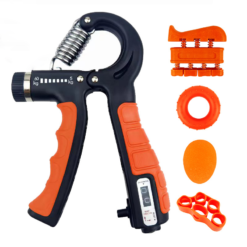
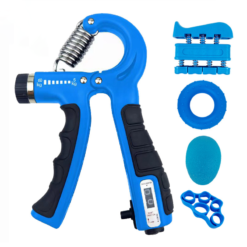
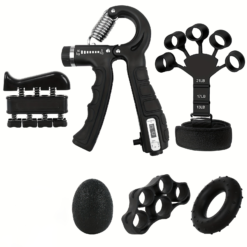
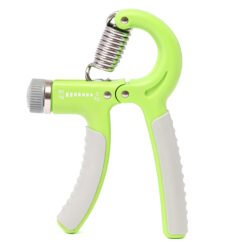
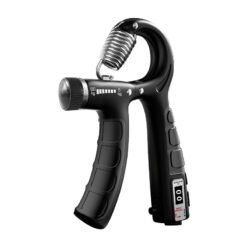
Standard plastic-handled store grippers are often too light to trigger true muscular hypertrophy. Upgrade to professional-grade, calibrated torsion-spring hand grippers. Train with a resistance level where you can complete only 5 to 8 clean, full closures per set.
2. Time Under Tension (TUT) Holds
To build robust tendon integrity and forearm density, implement heavy Farmer’s Carries or static bar hangs. Aim to hold heavy dumbbells or a pull-up bar for a continuous 30 to 60 seconds, maintaining a completely locked-in posture.
3. Finger Extension Counter-Training
Constantly squeezing without working the opposing opening muscles can lead to muscular imbalances and tennis elbow (lateral epicondylitis). Utilize thick rubber extensor bands to open your fingers against resistance, ensuring healthy, pain-free joint tracking.
Frequently Asked Questions
What is a dangerously low grip strength?
For men, a grip strength score falling below 26 kg is clinically associated with an increased risk of functional decline. For women, the clinical threshold for concern sits below 16 kg. If your numbers are consistently below these markers, it is highly recommended to introduce targeted resistance training.
How often should I test myself with a dynamometer?
Because neural pathways and muscle tissue require time to adapt and repair, testing daily is counterproductive. For tracking fitness or rehabilitation progress, testing once every 2 to 4 weeks provides a reliable snapshot of your actual trajectory.
Does a stronger grip mean a bigger bench press or deadlift?
Absolutely. A weak grip creates a neurological phenomenon called “inhibitory feedback.” If your brain senses that your hands are failing to secure the barbell, it will actively prevent your nervous system from fully recruiting larger muscle groups like your back, chest, and shoulders to protect you from injury.