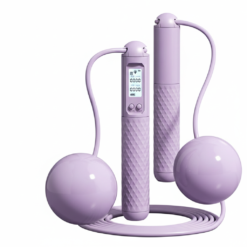
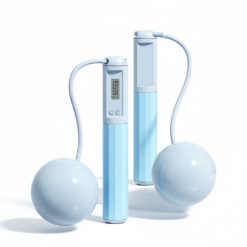
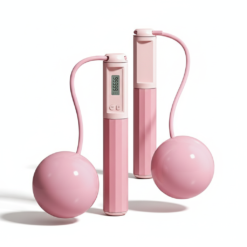
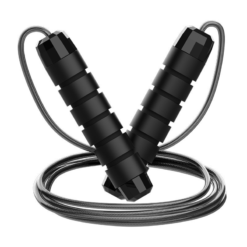
Introduction: The High-Margin Resurgence of the Jumprope
In the global fitness equipment landscape, few products offer the unique commercial advantages of the humble jumprope. For B2B buyers, fitness brand importers, and e-commerce procurement managers, this category represents a rare trifecta: exceptionally low manufacturing and shipping costs, high retail margins, and a consistently growing global search volume.
The global fitness equipment market continues to expand rapidly, driven by home workout trends, boutique functional fitness spaces, and a renewed emphasis on functional cardiovascular training. Consumers are no longer viewing jumping rope as a simple playground pastime; it is now recognized as an elite conditioning tool favored by boxers, CrossFit athletes, and everyday fitness enthusiasts alike.
For an importer or private-label brand owner, success in this category requires looking past entry-level, generic options. To capture high-value market share, you need to understand the technical nuances of the product, the physiological benefits driving consumer demand, and the exact manufacturing specifications that separate a premium, high-velocity SKU from a slow-moving, low-tier item.
This comprehensive guide breaks down the essential product knowledge, market insights, and manufacturing strategies needed to successfully launch, source, and scale a profitable jump rope line.
The Science of Skipping: Why Consumers Demand Jump Ropes
To market a product effectively to a global audience, your digital infrastructure—from Amazon listings to direct-to-consumer (D2C) blog portals—must lead with educational, authoritative value. Understanding the core physiological benefits of a jump rope routine allows brands to craft compelling copy that converts casual browsers into loyal brand advocates.
Maximum Caloric Efficiency
The modern fitness consumer values time optimization. Research shows that just 10 minutes of high-intensity jumping rope can yield cardiovascular benefits equivalent to a 30-minute jog. It is an incredibly efficient calorie burner, torches fat, and elevates the heart rate rapidly, making it the ideal tool for High-Intensity Interval Training (HIIT) formulations.
Advanced Cardiovascular and Cognitive Conditioning
Unlike linear aerobic exercises like running or cycling, utilizing a jumprope demands constant dynamic coordination, spatial awareness, and rhythm. It forces synchronous communication between the central nervous system and major muscle groups, improving balance, agility, and cognitive function.
Low-Impact, High-Density Bone Development
While it sounds counterintuitive, the repetitive, low-amplitude bounding associated with correct skipping form places a controlled, healthy stress on the lower body. This micro-loading stimulates osteoblast activity, increasing bone mineral density in the feet, ankles, and tibias, while presenting a lower acute injury risk than heavy-impact asphalt running.
Deconstructing the Anatomy of a Premium Jump Rope
A professional jump rope expert evaluates a product based on its structural components. When reviewing pre-production samples from manufacturing facilities, your engineering and QA teams should pay close attention to four distinct anatomical parts:
The core engine of any high-performance fitness rope is its bearing system. Entry-level models use a simple plastic peg or a single-axis rivet, which causes severe cable twisting, friction, and early material fatigue.
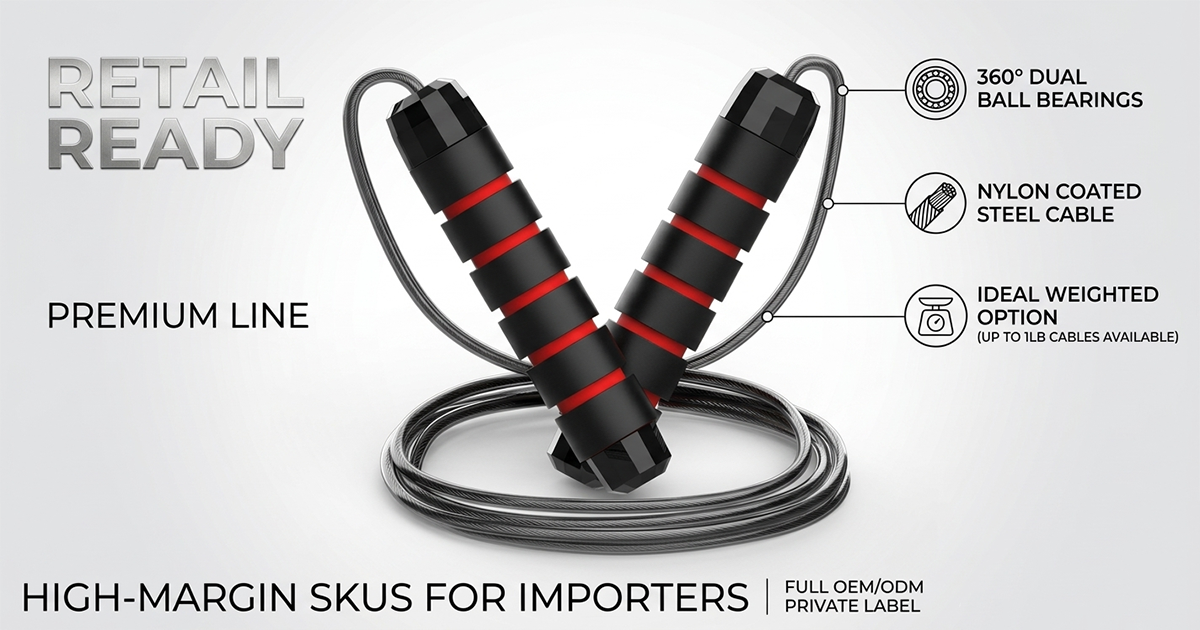
Premium commercial options utilize 360-degree dual ball bearing mechanisms housed inside the handle head. This setup allows the cable to spin completely friction-free, ensuring fluid rotation speeds and preventing the cord from tangling during advanced movements like double-unders.
2. Cable Core Composition
The choice of material for the cord defines the product’s primary use case:
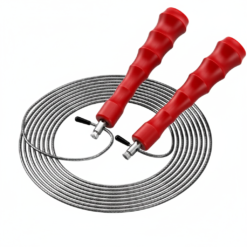
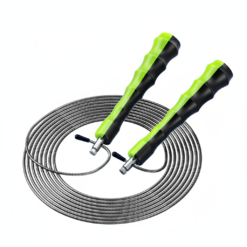
Speed Cables: Built with a thin, braided aircraft steel wire coated in protective nylon or PVC. These are built for raw velocity.
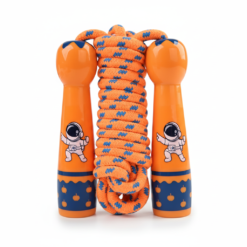
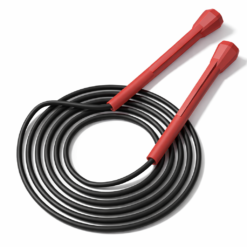
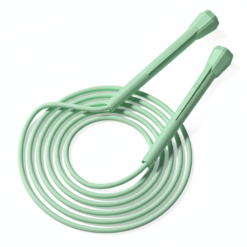
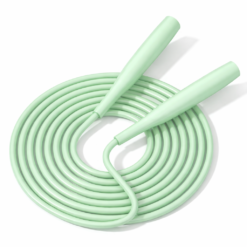
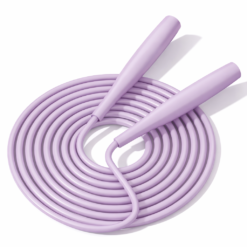
Solid PVC Cords: Typically 4mm to 5mm in diameter, these offer excellent aerodynamic feedback, making them perfect for beginners and freestyle tricks.
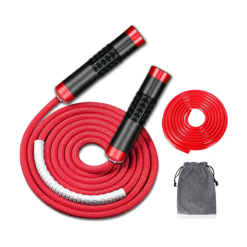
Weighted Poly Cables: Heavy-duty, thick woven strands designed to add intense physical resistance.
3. Handle Ergonomics and Material Selection
Handles must balance durability with a secure grip. Industrial options include injection-molded Polypropylene (PP), high-impact ABS, or CNC-machined aerospace aluminum. For high-end fitness brands, adding an anti-slip silicone sleeve or a moisture-wicking EVA foam wrap significantly boosts perceived retail value and user comfort.
4. Adjustment Mechanism Flexibility
Consumers come in all heights, meaning a one-size-fits-all approach fails instantly. Your production specifications should include an adjustable sizing infrastructure—either via robust adjustable thumb-screws or clean, internal compression wedges that allow users to cleanly trim away excess cable.
The Commercial Landscape: Categorizing Jump Ropes for Maximum Inventory Turn
To build a balanced, high-converting product line, import companies must segment their inventory to match distinct consumer personas. Relying on a single SKU leaves your brand vulnerable to agile competitors. Consider splitting your product development pipeline into these four key categories:
Strength Athletes, Martial Artists, Heavy Conditioning
1/2 lb to 2 lb interchangeable heavy cables, reinforced heavy-duty handles
Premium Elite Gear ($40–$70 MSRP)
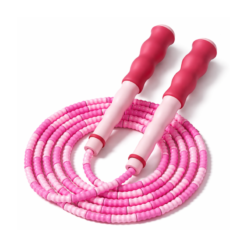
Freestyle / Beaded Ropes
Trick Jumpers, Community Fitness Influencers
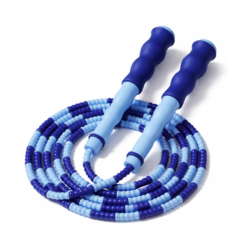
Shatterproof plastic beads over a flexible braided nylon core, extended handles
Niche Lifestyle ($18 -$30 MSRP)
The High-Growth Segment: Weighted Skipping
From a commercial standpoint, weighted skipping setups represent an exceptionally high-margin opportunity. By shifting the resistance load from the lower body to the upper torso, forearms, and shoulders, these specialized products appeal directly to the lucrative strength-training and martial arts sectors.
Offering an interchangeable cable ecosystem (where a single set of premium handles can quickly lock onto 1/4 lb, 1/2 lb, and 1 lb cables) allows you to secure a premium retail price point while opening the door for high-margin accessory upsells later on.
High-Retention Jump Rope Workouts: What Fitness Enthusiasts Look For
When building an online community around your fitness brand, offering high-value educational content—like workout programming—is a proven way to drive customer retention and lower customer acquisition costs (CAC). Users don’t just want to buy a jump rope; they want to know how to integrate it into their daily training to see real results.
Below are three optimized workout frameworks that your marketing team can turn into downloadable guides, instructional videos, or social media content to boost brand engagement.
1. The Conditioning Blast (For Speed and Agility)
Designed for athletes looking to improve footwork, speed, and overall cardiovascular endurance. This routine works best with a lightweight speed rope.
Warm-up: 2 minutes of easy, rhythmic jumping rope.
Interval Circuit (Repeat 5 Times):
30 seconds of high-speed single-unders (maximum velocity).
30 seconds of rest.
30 seconds of alternate-foot steps (skipping in place).
30 seconds of rest.
Cooldown: 2 minutes of gentle stretching and deep breathing.
2. The Power and Upper-Body Burnout (For Strength Tracking)
This routine leverages a weighted skipping approach to target the shoulders, forearms, and core. It is an excellent finisher for weightlifters and martial artists.
Warm-up: 3 minutes of mobility work for the shoulders and wrists.
The Matrix (Repeat 4 Times):
1 minute of continuous jumping with a 1/2 lb or 1 lb weighted rope.
45 seconds of standard push-ups.
1 minute of continuous jumping with a 1/2 lb weighted rope.
45 seconds of air squats.
Cooldown: 3 minutes of targeted upper-body stretching.
3. The Fat-Burning HIIT Pyramid (For General Weight Loss)
A highly effective, time-efficient routine designed for home fitness enthusiasts looking to maximize caloric burn in under 20 minutes.
[30s Work / 30s Rest] -> [45s Work / 30s Rest] -> [60s Work / 30s Rest] -> [45s Work / 30s Rest] -> [30s Work]
Structure: Complete the entire ladder, rest for 2 minutes, then repeat for a total of 3 rounds. Maintain a steady, unbroken pace throughout the work intervals.
B2B Sourcing Strategy: Navigating Manufacturing in China
For an enterprise buyer or jump rope import business, managing the supply chain effectively is just as important as direct-to-consumer marketing. Shenzhen, Guangzhou, and the broader Zhejiang province stand as the undisputed global epicenters for high-fidelity fitness manufacturing.
However, translating an ambitious product concept into an optimized, shelf-ready reality requires systematic vendor management.
[RFQs Out] ➔ [Sample Run & Lab Testing] ➔ [Factory Audit] ➔ [Mass Production & Third-Party Inspection] ➔ [FCL/LCL Shipping]
1. Designing the Perfect RFQ (Request for Quotation)
When reaching out to prospective contract manufacturers on B2B platforms, avoid vague inquiries. Send highly structured, technical briefs. Clearly define your material requirements, specifying CNC aluminum or ABS handles, exact steel wire gauges, double ball-bearing configurations, and clear surface finish standards (like anodized coatings or laser-etched branding).
Be transparent about your projected annual volume while setting a firm target for your initial Minimum Order Quantity (MOQ) test run.
Before approving a factory for full-scale production, require a pre-production sample run and put the components through rigorous testing:
Tensile Strength Evaluation: Pull-test the cable housing connections to ensure they won’t snap under high rotational stress.
Salt-Spray Testing: Verify that all metallic bearings, screws, and hardware are rust-resistant and won’t corrode from sweat exposure.
Drop-Impact Testing: Drop the plastic and aluminum handles onto solid concrete from a height of two meters to check for cracks or structural failures.
3. Custom Packaging and Shipping Optimization
The compact footprint of a jumprope makes it an incredibly cost-effective product to ship. To maximize your shipping container space, avoid bulky, generic clamshell plastic. Instead, opt for custom, flat-packed premium cardboard boxes or breathable, branded nylon carrying pouches.
Optimizing your packaging design reduces dimensional weight charges, protects your inventory during transit, and creates a high-end, premium unboxing experience for the end consumer.
Pros and Cons of Mass-Market vs. Premium Jump Rope Sourcing
To help your procurement team make the right choice for your brand’s market positioning, here is a straightforward look at the trade-offs between mass-market economy sourcing and premium-tier manufacturing.
Mass-Market Sourcing (Low-Cost PVC/Plastic Ropes)
Pros: Very low per-unit costs ($0.30 – $1.20 FOB), accessible MOQs, and a massive addressable market for casual, budget-conscious buyers.
Cons: Low brand loyalty, thin profit margins, fierce price competition on major marketplaces, and higher return rates due to material kinks and lower durability.
Pros: Strong profit margins, high perceived value ($25 – $60+ retail), lower return rates, and opportunities for recurring accessory sales (like replacement cables).
Cons: Higher initial capital investment ($3.00 – $8.00 FOB), stricter quality control demands, and a longer sales cycle that requires deeper consumer education.
Expert Tips for E-Commerce Brand Differentiation
The fitness market is crowded with generic products. To break through the noise and scale a sustainable brand, consider these proven strategies used by top-performing e-commerce companies:
Offer a Complete Ecosystem: Don’t just sell an isolated rope. Package your product as a complete kit that includes interchangeable speed and fitness cables, an outdoor protective canvas wrap, a microfiber storage pouch, and a spare hardware replacement kit.
Protect Your IP Early: If you design an innovative handle shape or a novel adjustment mechanism, invest in a design patent. Register your trademarks across your target markets early to protect your listing from unauthorized copycats.
Provide Clean, Studio-Quality Visuals: Win the digital shelf by investing in clean photography. Show your products completely isolated on 100% solid white backgrounds for clean marketplace presentation, paired with high-energy lifestyle imagery that showcases the rope in action.
Frequently Asked Questions (FAQ)
Q1: What makes a ball-bearing jump rope better than a standard peg-and-cord model?
A ball-bearing system allows the cable to rotate independently of the handle across a full 360-degree axis. This eliminates friction and cord twisting, providing a smoother spin that allows users to reach higher speeds and execute advanced fitness movements effortlessly.
Q2: Why should fitness brands consider adding weighted skipping ropes to their catalogs?
Weighted options command a much higher retail price point ($35–$70) compared to basic speed ropes. They expand your target market to include strength athletes, martial artists, and boxing clubs, driving higher average order values (AOV) and stronger net profit margins.
Q3: What is the standard MOQ when sourcing custom-branded fitness ropes from China?
For standard styles with custom colors and silk-screened logos, typical MOQs range from 500 to 1,000 units per colorway. Fully customized injection-molded handles or custom-engineered bearing housings generally require an initial run of 2,000 to 3,000 units to cover tool and die costs.
Q4: How do I protect my inventory from rusting and early wear?
Ensure your manufacturing specifications call for sealed stainless-steel or chrome-plated ball bearings. For the cables, use braided steel wire coated in a high-density polyurethane (PU) or nylon jacket, which offers superior abrasion resistance over standard PVC.
Q5: What is the ideal cable length for a retail-ready fitness jump rope?
Standard production runs should feature a 10-foot (approx. 3-meter) cable. This length accommodates users up to 6’6″ tall. By integrating a toolless adjustable mechanism, users can easily trim the cable down to their perfect custom fit.
Conclusion & Next Steps
The global jumprope market remains a highly lucrative space for international importers, e-commerce brands, and B2B fitness buyers who prioritize quality engineering and smart market positioning. By moving away from race-to-the-bottom economy models and investing in premium bearing systems, durable materials, and modular weighted options, your business can build a high-margin, resilient product portfolio.
Ready to upscale your fitness inventory or launch a private-label brand? Start by drafting a detailed technical RFQ using the specifications outlined in this guide, secure prototype samples from verified manufacturers, and build a premium digital storefront designed to convert modern fitness enthusiasts.